CedarQuill Pest Management delivers targeted pest control services in San Antonio to resolve active residential infestations and secure building envelopes against persistent sub-tropical pressure. Property owners searching for professional pest control services near me receive direct diagnostic evaluations focused on environmental biology rather than repetitive chemical applications.
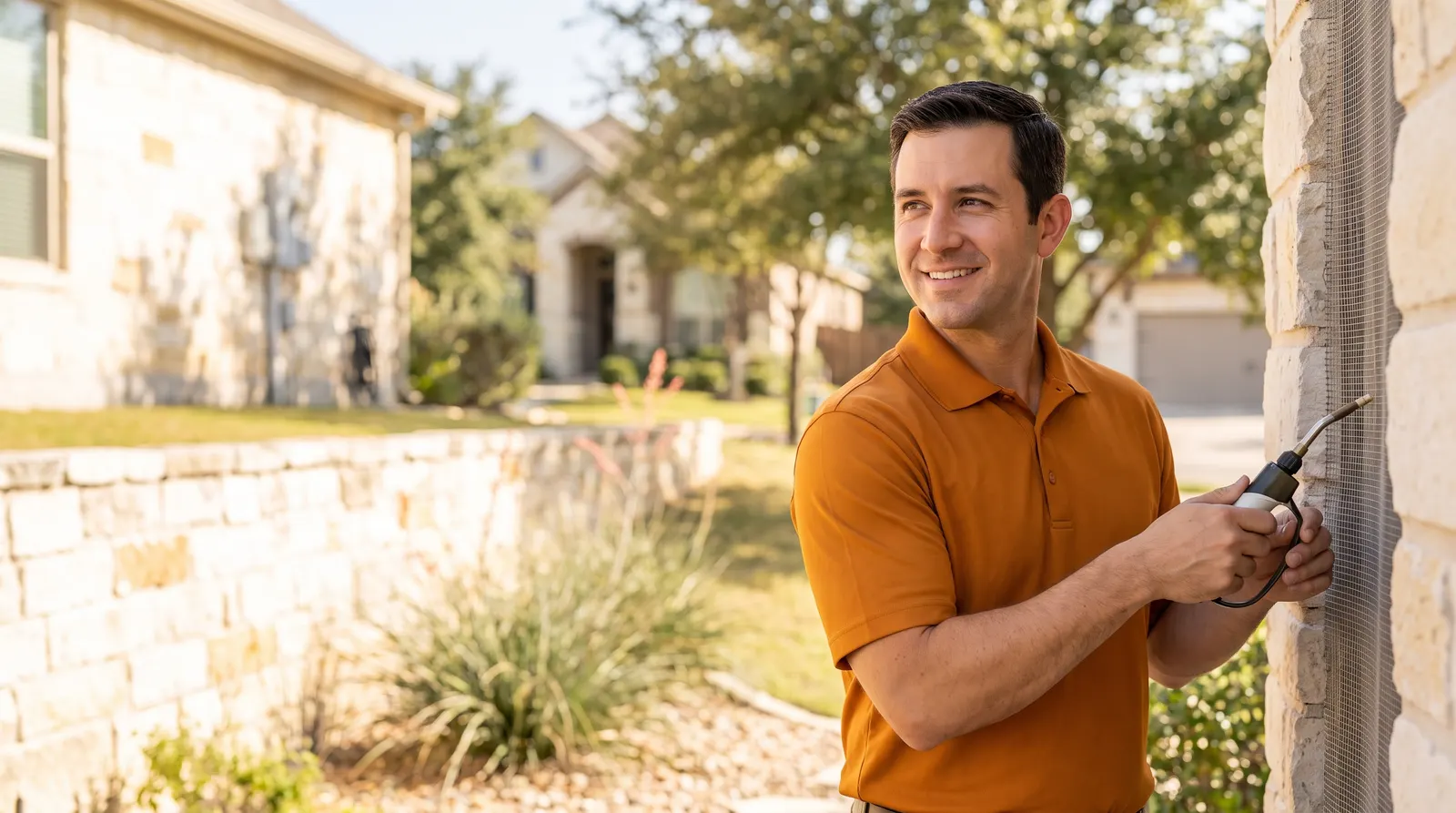
Pest control services in San Antonio is an applied ecological and architectural intervention system that identifies target arthropod or mammalian species, interrupts breeding cycles, and physically seals structural entry points across regional limestone foundations and rooflines.
Every service reflects the same meticulous attention to detail, whether it's a single job or a larger pest control services project across San Antonio.
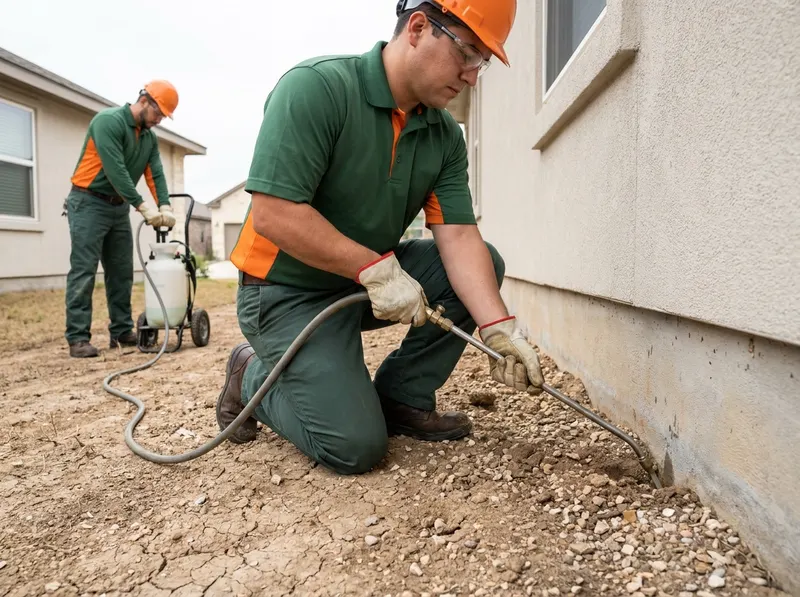
Subterranean termites cause significant structural wood destruction across South Texas by transiting through foundation micro-fissures, plumbing penetrations, and perimeter expansion joints using protective mud tubes. Treatment uses liquid non-repellent termiticides applied along continuous structural foundation trenches excavated six inches deep by six inches wide in adherence to structural pest management standards established by the Texas Department of Agriculture . Technicians rod the chemical mixture down to the top of the concrete footing at a calculated volume of four finished gallons per ten linear feet, ensuring backfilled soil particles bind tightly with the active non-repellent agent. Forging worker termites pass through this treated perimeter zone without detection, transferring the chemical back into the subterranean gallery network through habitual social grooming, mutual food exchange, and trophallaxis, which systematically collapses the reproductive queen and the broader subterranean colony within sixty to ninety days. Post-treatment protocols include installing exterior cellulose monitoring stations at ten-foot intervals along high-moisture perimeter beddings to track regional soil population rebound.
Get a quote →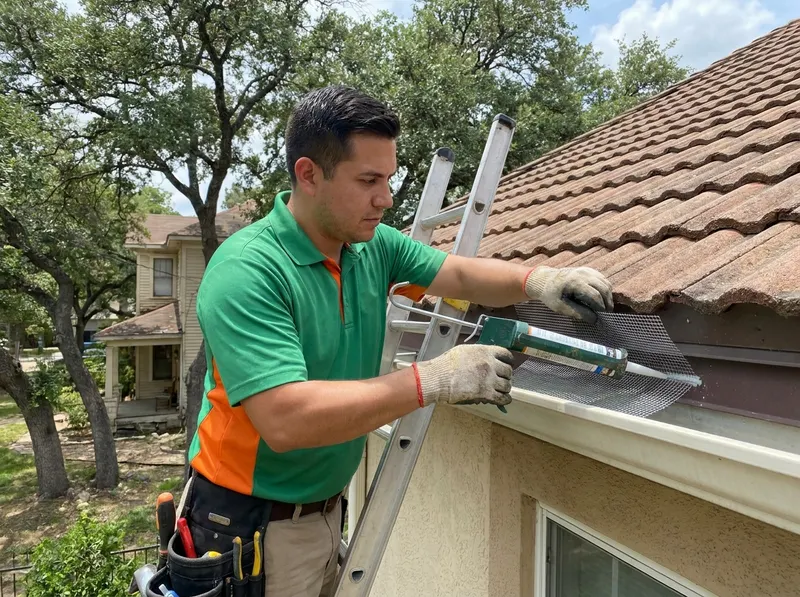
Roof rats exploit overhanging live oak canopies, utility service wires, and architectural roofline vulnerabilities typical of Texas Hill Country residential builds to gain access to warm attic insulation. Technicians map primary ingress portals along fascia boards, soffits, frieze blocks, roof returns, and ridge vents, sealing every opening larger than one-quarter inch using galvanized 23-gauge steel hardware cloth, metal flashing, and exterior elastomeric compounds. Animal handling protocols align with urban wildlife damage criteria defined by the Texas Parks and Wildlife Department to secure the building envelope against future entry without relying on rodenticides inside residential walls. Technicians mount directional one-way exit doors over primary travel paths, permitting existing attic colonies to vacate the structure toward outdoor foraging zones while mechanically preventing re-entry. Once diagnostic acoustic monitors verify complete attic vacancy, technicians remove the exit devices, seal the final structural junction with color-matched metal caps, and treat external rub marks with enzymatic cleansers to erase directional pheromone trails.
Get a quote →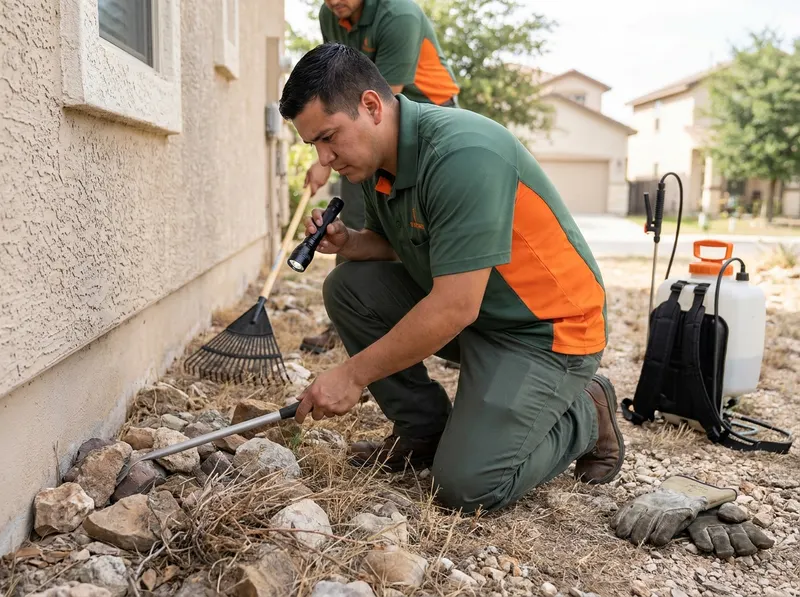
Centruroides vittatus inhabits native limestone outcroppings, decorative rock gardens, and decomposing cedar mulch, migrating into shaded residential living zones during prolonged summer droughts. Intervention targets rock retaining walls, flagstone patios, foundation weep holes, and exterior thresholds using microencapsulated pyrethroids and weep screed mesh covers that allow air circulation while preventing scorpion ingress. Ground application techniques adhere to outdoor environmental protection criteria formulated by the United States Environmental Protection Agency to prevent thermal degradation from ultraviolet exposure and surface heat exceeding 100 degrees Fahrenheit. The microencapsulation technology encases the active compound inside microscopic polymer beads, protecting the chemistry from immediate solar breakdown and allowing it to cling directly to the waxy cuticle of foraging arachnids as they traverse foundation walls. Technicians also perform nighttime ultraviolet fluorescent inspections to map daytime resting harborage sites across perimeter masonry, outbuildings, and firewood storage stacks.
Get a quote →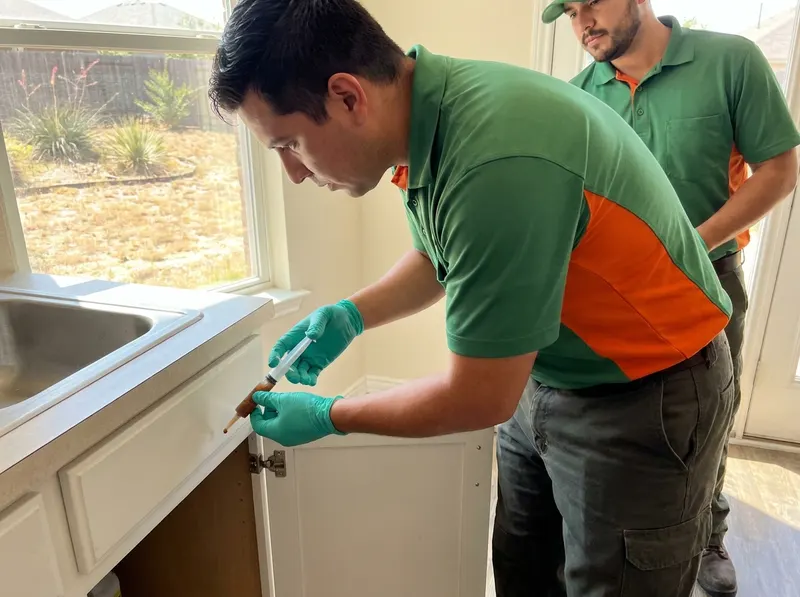
Severe indoor Blattella germanica infestations demand precise insect growth regulators, abamectin gel matrices, and structural void dusting rather than broad-spectrum synthetic aerosol treatments that disperse populations into adjoining rooms. Applications focus directly on cabinet hinges, electrical raceways, under-counter refrigeration motor housings, and plumbing wall penetrations where heat and moisture concentrate. Treatment standards reflect commercial vector protocols established by the Centers for Disease Control and Prevention to prevent food prep contamination and eliminate indoor egg capsules known as oothecae. By incorporating juvenile hormone mimics such as pyriproxyfen, the protocol halts nymphal molting cycles and sterilizes adult females, preventing population resurgence. Technicians calibrate gel placements down to 0.25-gram micro-dots spaced twelve inches apart within primary harborage seams, eliminating bait aversion and providing continuous feeding uptake for juvenile nymphs emerging from hidden egg cases weeks after initial application.
Get a quote →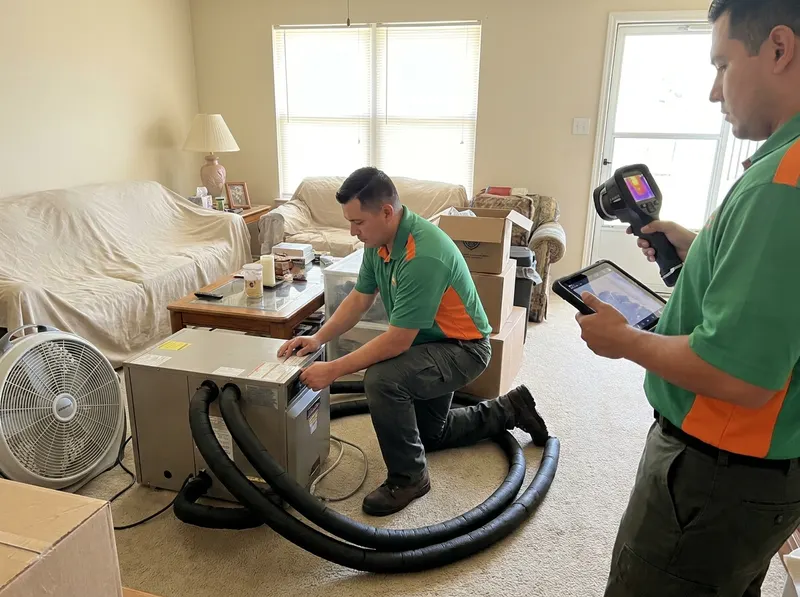
Thermal remediation heats infested enclosed living units to a verified target temperature range between 122 and 135 degrees Fahrenheit, neutralizing Cimex lectularius adults, nymphs, and eggs in a single targeted cycle. High-output commercial electric heaters and directional axial air movers circulate convective heat throughout wall cavities, box springs, mattress seams, and structural baseboard voids. Technicians monitor structural heat distribution through wireless thermal sensors, preventing thermal damage to household fixtures according to thermal guidelines cataloged by the Journal of Thermal Biology . Because temperatures exceeding 120 degrees Fahrenheit cause rapid, irreversible cellular protein coagulation and dehydration across all bed bug life stages, this protocol eradicates insecticide-resistant strains without leaving lingering chemical residues on sleeping surfaces. Technicians maintain thermal equilibrium for a minimum of four continuous hours to guarantee that heat fully penetrates structural wall studs, thick upholstery, and deep floorboard seams.
Get a quote →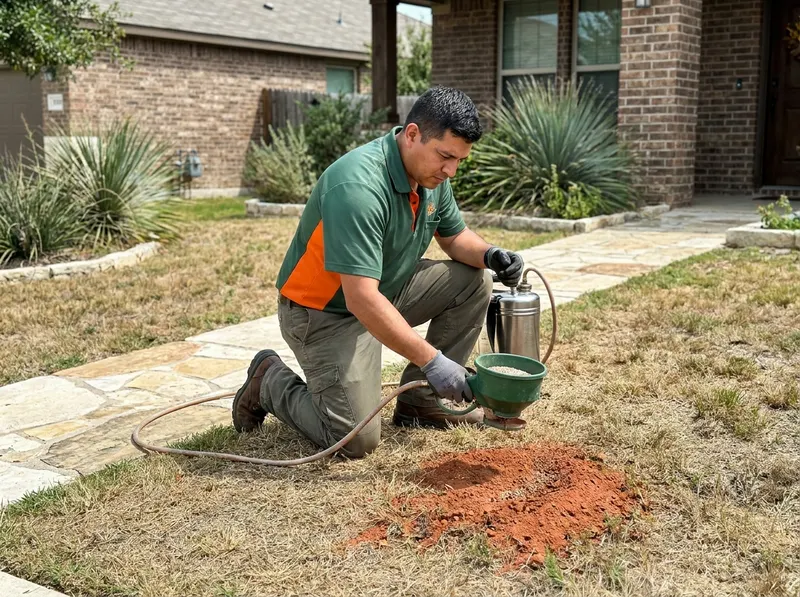
Solenopsis invicta mounds establish deep subterranean tunnels beneath turfgrass, decorative paving, and masonry flatwork across the Edwards Aquifer recharge zone. Technicians apply targeted hydramethylnon or methoprene broadcast baits when foraging surface soil temperatures read between 70 and 90 degrees Fahrenheit, complying with water safety criteria supported by the Edwards Aquifer Authority to protect sensitive groundwater systems. Foraging worker ants harvest the bait particles and carry them underground to the reproductive queens, interrupting reproductive egg production and collapsing the mound infrastructure within two to three weeks without triggering colony budding. For rapid suppression near outdoor patios, high-voltage HVAC compressors, and electrical transformers, technicians execute direct botanical liquid drenches around the central mound perimeter, destroying defensive worker ants before they penetrate electrical contact points and cause short-circuit mechanical failures across residential cooling equipment.
Get a quote →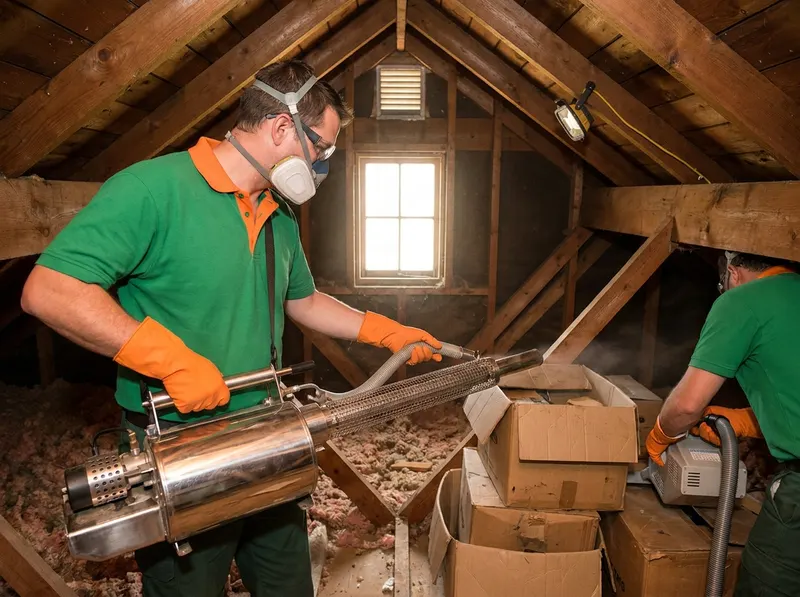
Mammalian or avian nesting material inside residential attic spaces leads to ectoparasite proliferation, bat bugs, mites, and aerosolized biological pathogens. Crews mechanically extract contaminated blown insulation using high-vacuum negative pressure containment lines, treat framing timber with botanical enzyme sanitizers, and install fresh pest-resistant borate insulation. Cleanup sequences integrate attic workspace safety procedures outlined by the Occupational Safety and Health Administration to protect indoor air quality from circulating airborne guano, urine salts, and particulate matter. The antimicrobial enzyme mist breaks down organic uric acid crystals and neutralizes pheromone markers that otherwise attract wandering wildlife back to the attic envelope. Technicians then apply a fine dusting of sodium borate powder across exposed ceiling joists to establish a lifetime barrier against wood-boring beetles, silverfish, and attic-dwelling roaches before blowing in fresh virgin cellulose insulation calibrated to an R-38 thermal standard.
Get a quote →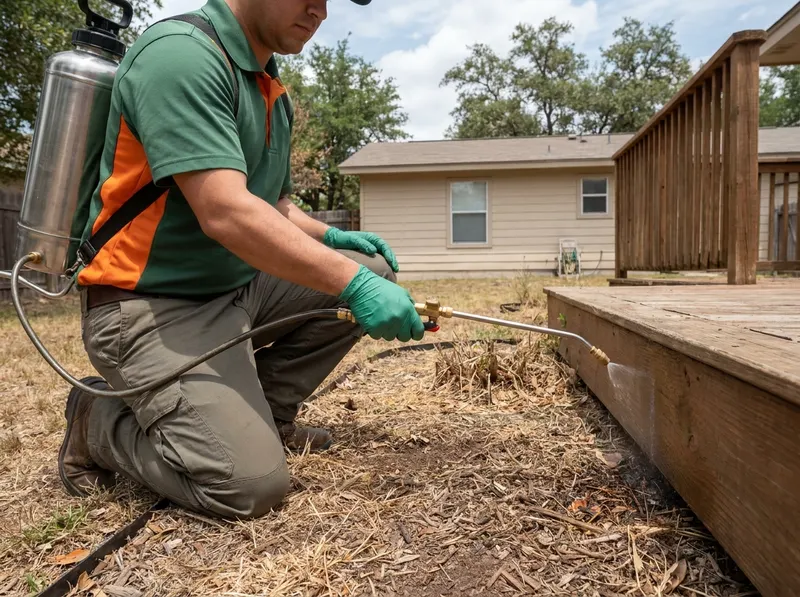
Outdoor flea and tick habitats require combined insect growth regulators and liquid contact formulations applied directly to shaded turf, dog runs, dense groundcover, and low shrub canopies where wildlife and domestic pets rest. Protocols break the 21-day egg-to-adult emergence cycle without contaminating urban drainage waterways, referencing veterinary vector metrics maintained by the Companion Animal Parasite Council . Applications focus heavily on moist, low-UV zones beneath wooden decking, perimeter fences, and tree groupings where brown dog ticks and cat fleas deposit eggs. Technicians combine pyrethrin-derived adulticides with insect growth regulators like novaluron, which arrests larval development in the soil and prevents pupae from emerging into biting adults. This multi-chemistry barrier stands up against heavy sprinkler irrigation, delivering thirty to sixty days of continuous active environmental suppression across outdoor pet exercise areas.
Get a quote →You get a firm, itemized quote for your pest control services before any work begins, no surprises, no pressure.
Careful prep, tidy work, and a full cleanup when we are done. We treat your home and belongings like our own.
The same trusted, background-checked team from the first call to the final check.
Selecting appropriate pest remediation requires matching the biological pressure of the invading organism to the structural architecture of the home. If a property exhibits isolated, seasonal perimeter activity such as cellar spiders, field crickets, or smokybrown cockroaches foraging along outdoor slab perimeters, a targeted botanical perimeter barrier provides sufficient deterrence without disrupting interior living spaces or introducing synthetic aerosols indoors. If wood-destroying subterranean organisms or established German cockroach populations colonize structural voids, choose targeted non-repellent liquid termiticides or precision baiting systems that exploit social insect grooming habits to eradicate the primary colony rather than relying on perimeter contact repellents that merely divert activity elsewhere.
If attic spaces harbor roof rats or rock squirrels, mechanical exclusion paired with localized one-way transfer funnels is necessary; simply placing rodenticide baits inside an attic risks secondary odor issues from decaying carcasses and fails to address the external masonry breach where rodents enter. The inherent operational trade-off centers on upfront mechanical labor versus perpetual chemical maintenance: localized sprays require quarterly reapplication to survive Texas solar degradation and heavy rain washouts, whereas physical architectural exclusion carries higher initial diagnostic labor and installation investment but permanently stops ingress routes without continuous chemical off-gassing. For severe indoor issues like bed bug infestations, selecting whole-structure thermal remediation neutralizes all biological life stages including heat-resistant eggs in six to eight hours, trading off the higher equipment staging footprint for immediate single-day eradication compared to multi-week chemical re-treatments.
Similarly, large subterranean termite infestations penetrating expansion joints require continuous chemical soil trenches down to the footing, which demands significant physical digging through rocky soils but establishes a ten-year horizontal barrier that localized surface spot-sprays cannot match. For properties situated on expansive Houston black clay, foundation shifting often tears superficial silicone caulking; utilizing heavy-gauge hardware cloth and high-modulus polyurethane sealant ensures the physical barrier flexes with soil movement rather than cracking open within one season. When balancing landscape aesthetics against tick and fire ant pressure, choosing broadcast insect growth regulators preserves predatory beneficial insects and groundwater tables across sensitive watershed zones, whereas blanket broad-spectrum organophosphate applications kill non-target pollinators and trigger secondary mite outbreaks on ornamental shrubs.
Homeowners evaluating these pathways must weigh biological persistence against structural longevity: chemical applications manage high immediate populations during seasonal surges, but lasting structural integrity always demands exterior physical envelope closure.
Every project gets a firm, written price after a free on-site visit. Ranges below for orientation.
Tell us about your pest control services job and we'll send a clear, written quote, usually the same day. Or just call and talk to a real San Antonio pro.
(469) 424-9098
Properties throughout Bexar County face unique structural pest dynamics due to the sharp geological transition between rich blackland prairie soils and fractured Edwards limestone outcroppings. Expansive clay soils frequently shift slab foundations near Westover Hills and the Medical Center, shearing exterior plumbing wraps and generating hairline masonry gaps that serve as direct travel corridors for smokybrown cockroaches and subterranean termites seeking indoor moisture during hot summer droughts. Concurrently, historic structures near King William and Monte Vista feature pier-and-beam crawlspaces and pierced limestone footings that demand careful architectural sealing to deter roof rats migrating from the riparian corridors along the San Antonio River Walk and Brackenridge Park. In northern limestone communities such as Stone Oak and The Dominion, residential developments border natural cedar breaks and karst terrain, resulting in persistent migrations of striped bark scorpions and native centipedes into ground-floor living areas. The subtropical climate generates extended pest breeding seasons, where warm winter soil profiles fail to kill dormant insect pupae, producing sustained arthropod pressure across regional properties from February through December. Local drainage pathways feeding into Helotes Creek and regional storm runoff culverts further amplify seasonal perimeter pest pressures, requiring precise mechanical exclusion along slab perimeters and weep screeds rather than generic broadcast chemical sprays that degrade quickly under intense South Texas solar radiation.
Free estimates for San Antonio & the surrounding area.
For standards, safe disposal, and service guidance on pest control services in San Antonio, TX, useful references include U.S. EPA, ENERGY STAR, U.S. Dept. of Energy, Consumer.gov, U.S. Census Bureau, and Google Maps. General consumer and small-business resources are available from USA.gov, Better Business Bureau, FTC Consumer Advice, U.S. Small Business Administration, and Ready.gov.
 CedarQuill Pest Management